Thursday, February 1, 2024

‘A second Pericles’ in the emperor Hadrian

by Damien F. Mackey “Even Athens may have reflected with complacency on the loss of her liberty, while she revered a second Pericles in Hadrian”. James Bowling Mozley Some Commonalities The famous beard We read about it, for instance, in the book, Rethinking Revolutions Through Ancient Greece (ed. Simon Goldhill, Robin Osborne): But if Hadrian's beard is not that of a philosopher, what are we to make of it? Susan Walker has recently refined her answer to this question to describe the beard ‘as worn in the style of Pericles’. …. Pericles’ short, curly beard and moustache put her on safer ground art-historically than those who favour a philosophical reading …. Historiographically it lends him an identity that complements his building in Athens. But the more one pursues the implications of this hypothesis, the more one is made to doubt it. If one reads Plutarch to get a sense of Pericles’ reputation under Hadrian, one encounters an icon whose physical appearance is similar to Pisistratus. …. In some ways this is eminently suitable: Pisistratus is a prolific builder in Athens and inaugurates the Olympeion that Hadrian is to finish. …. But were Hadrian attempting to instigate a revolution, there is danger in even the slightest whiff of tyranny. Rest-assured, there is little additional evidence to support a Pericles-Hadrian parallel, at least not compared to stronger associations with a bearded Zeus or Jupiter …. [End of quote] Eleusinian mysteries Under Pericles http://www.e-telescope.gr/en/mystery/the-eleusinian-mysteries The Eleusinian mysteries attracted many initiates in Athens from about the seventh century BC, and the epics of Homer prove that, even that early, Greeks believed that the Eleusinian rites granted the initiates happiness after death. The citizens of Athens adopted the Mysteries of Eleusis as a feature of the state cult, then, at the time of Pericles, other Greek cities were admitted and later everyone who could speak Greek and had shed no blood or had subsequently been purified. …. Under Peisistratus https://www.britannica.com/biography/Peisistratus Since religion was closely interwoven with the structure of the Greek polis, or city-state, many of [Peisistratus’] steps were religious reforms. He brought the great shrine of Demeter at Eleusis under state control and constructed the first major Hall of the Mysteries (Telesterion) for the annual rites of initiation into the cult. Many local cults of Attica were either moved to the city or had branch shrines there. Artemis, for instance, continued to be worshiped at Brauron, but now there was also a shrine to Artemis on the Acropolis. Above all, Athena now became the main deity to be revered by all Athenian citizens. Peisistratus constructed an entry gate (Propylaea) on the Acropolis and perhaps built an old Parthenon under the temple that now stands on the crest of the Acropolis. Many sculptured fragments of limestone from Peisistratid buildings have been found on the Acropolis, and the foundations of a major, unfinished temple can still be seen. …. Under Hadrian http://romeartlover.tripod.com/Eleusi.html Emperor Hadrian was initiated into the Eleusinian Mysteries; he and his successors Antoninus Pius, Marcus Aurelius and Commodus all protected the shrine and contributed to its embellishment …. https://en.wikipedia.org/wiki/Hadrian In September 128 [sic], Hadrian attended the Eleusinian mysteries again. This time his visit to Greece seems to have concentrated on Athens and Sparta – the two ancient rivals for dominance of Greece. Hadrian had played with the idea of focusing his Greek revival around the Amphictyonic League based in Delphi, but by now he had decided on something far grander. Panhellenion and Olympeion “The Panhellenion was devised with a view to associating the Roman Emperor with the protection of Greek culture and of the "liberties" of Greece – in this case, urban self-government. It allowed Hadrian to appear as the fictive heir to Pericles, who supposedly had convened a previous Panhellenic Congress …”. Peisistratus Rethinking Revolutions Through Ancient Greece: “Pisistratus is a prolific builder in Athens and inaugurates the Olympeion that Hadrian is to finish”. http://penelope.uchicago.edu/~grout/encyclopaedia_romana/greece/olympieion/olympianzeus.html Dedicated to Olympian Zeus, the Olympieion was situated on the bank of the river Ilissus southeast of the Acropolis. It was built on the site of an ancient Doric temple, the foundation of which had been laid out by the tyrant Pisistratus, but construction was abandoned several decades later in 510 BC when his son Hippias, whose rule had become increasingly despotic, was expelled from Athens and a democracy established (he would return twenty years later with the Persians at Marathon, Thucydides, Peloponnesian War, VI.54ff). Aristotle cites the temple and the pyramids of Egypt as examples of how rulers subdue their populations by engaging them in such grandiose projects. Kept poor and preoccupied with hard work, there was not the time to conspire (Politics, V.11). Over three centuries later, in 174 BC, Antiochus IV Epiphanes (king of Syria and the "vile person" of Daniel 11:21) commissioned the Roman architect Cossutius to begin work again on the same ground plan. He did so "with great skill and taste," says Vitruvius, constructing a temple "of large dimensions, and of the Corinthian order and proportions" (On Architecture, VII, Pref.15, 17). Of all the works of Antiochus, the Temple of Jupiter Olympius or Olympian (as the Romans called it) was the "only one in the world, the plan of which was suitable to the greatness of the deity" (Livy, History of Rome, XLI.20). But when the king died a decade later, the temple still was "left half finished" (Strabo, Geography, IX.1.17), although it extended at least to the architrave of the columns still standing at the southeastern corner. …. Pericles http://erenow.com/biographies/hadrian-and-the-triumph-of-rome/24.html Plutarch writes that Pericles “introduced a bill to the effect that all Hellenes wheresoever resident in Europe or in Asia, small and large cities alike, should be invited to send deputies to a council at Athens.” The aim was to discuss matters of common interest—restoration of the temples the Persians had burned down, payment of vows to the gods for the great deliverance, and clearing the seas of pirates. …. Hadrian http://erenow.com/biographies/hadrian-and-the-triumph-of-rome/24.html More than half a millennium later [sic] Hadrian picked it up where it had fallen. During his previous visit, his attention had been caught by the synedrion, or council, at Delphi for the Amphictyonic League, but it did not include enough Greek cities. He decided to launch a new Panhellenion along Periclean lines. As before, a grandly refurbished Athens was to be the headquarters and Greek cities would be invited to send delegates to an inaugural assembly. Member communities had to prove their Greekness, both culturally and in genetic descent, although in practice some bogus pedigrees were accepted. The enterprise had a somewhat antiquarian character. So far as we can tell from the fragmentary surviving evidence, Hadrian aimed at roughly the same catchment area as Pericles had done—in essence, the basin of the Ionian Sea. Italy and Sicily were excluded once again, and there was no representation of Greek settlements in Egypt, Syria, or Anatolia. The emperor made a point of visiting Sparta, presumably to ensure that it did not stay away as it had done in the fifth century. A renaissance of old glories was reflected in the development of archaized language; so, for example, Spartan young men (epheboi) suddenly took on an antiquated Doric dialect in their dedications to Artemis Orthia, a patron goddess of the city. It seems clear that one of the purposes of Hadrian’s policy was to recruit the past to influence and to help define and improve the decadent present. Hadrian began to call himself the “Olympian,” echoing the example of Pericles as well as reflecting the completion of the Olympieion, the vast temple to Olympian Zeus. He was soon widely known throughout the Hellenic eastern provinces as “Hadrianos Sebastos Olumpios,” Sebastos being the Greek word for Augustus, or indeed “Hadrianos Sebastos Zeus Olumpios.” What did the Panhellenion actually do? It administered its own affairs, managed its shrine not far from the Roman Agora and offices, and promoted a quadrennial festival. It also assessed qualifications for membership. But Hadrian was careful to give it no freestanding political powers. All important decisions were referred to him for approval. Rather, the focus was cultural and religious, and a connection was forged with the Eleusinian Mysteries. In essence, the task was to build spiritual and intellectual links among the cities of the Greek world, and to foster a sense of community. The Panhellenion also furthered the careers of delegates, who were usually leading members of Greek elites (but not necessarily Roman citizens), and created an international “old-boy network” of friends who advanced one another’s interests. …. “Even Athens may have reflected with complacency on the loss of her liberty, while she revered a second Pericles in Hadrian”. James Bowling Mozley Ronnie Leslie will, for his part, describe the emperor Hadrian as “a new Pericles” in his article “Hadrian’s Second Jewish Revolt: Political or Religious?” But see my series arguing against the traditional view that there was a Second Jewish Revolt during the C2nd AD: Simon Bar Kochba in Temple period (6) Simon Bar Kochba in Temple period | Damien Mackey - Academia.edu Ronnie Leslie writes: file:///C:/Users/lib_pubaccess/AppData/Local/Microsoft/Windows/INetCache/IE/IV9J19BF/Ronnie-Leslie.pdf …. Right from the start Hadrian made it clear that he was his own man in his administration of the empire; he resumed the policy of the early emperors, dedicating his time to maintaining peace throughout the empire. However, this policy did not last long; one of his very first decisions was the abandonment of the eastern territories which Trajan had just conquered during his last campaign. Such a withdrawal, and the surrender of territory for which the Roman army had just paid for in blood, would hardly have been popular. Hadrian may be sharply contrasted with his predecessor Trajan, who owed his elevation to his successful wars in the Rhine region. After Trajan’s death, Hadrian called upon the eastern armies; however, the troops were demoralized by Trajan’s death, which in turn acted as a signal to Rome’s enemies in every province. …. Hadrian spent the better part of his reign away from the capital exploring every province of the empire. …. On his travels he grew deeply devoted to Greek studies, so much so that some Romans called him the little Greekling. …. Throughout his twenty-one year reign, Hadrian’s infinity for Greek culture are seen throughout his administration as well as religious ideology. He had been so fascinated by the culture of Greece that he introduced Greek customs and even grew a beard which was traditionally Greek. …. Furthermore, his court assumed more and more a Hellenic characteristic. He was constantly surrounded by Greek playwrights and sophists; his favorite was Antinous … with whom he had become acquainted with in Asia Minor and brought to Rome. He seemed to have viewed himself as a new Pericles; thus, most of his attention of the empire was exclusively focused on the east, particularly Athens. …. [End of quote] Then there is this one, “Pericles and Athens”: https://erenow.com/ancient/the-classical-world-an-epic-history-from-homer-to-hadrian/15.html “From the 450s until 429 the most famous Athenian politician was Pericles, so much so that this era is often known nowadays as the age of ‘Periclean Athens’. The Emperor Hadrian was well aware of Pericles’ example. Among his special favours for Athens, Hadrian may even have modelled his ‘Panhellenic’ role for the city on a project which biographers had ascribed to Pericles himself”. And also this one, a supposed “renaissance of old glories”: https://erenow.com/biographies/hadrian-and-the-triumph-of-rome/24.html …. Plutarch writes that Pericles “introduced a bill to the effect that all Hellenes wheresoever resident in Europe or in Asia, small and large cities alike, should be invited to send deputies to a council at Athens.” The aim was to discuss matters of common interest—restoration of the temples the Persians had burned down, payment of vows to the gods for the great deliverance, and clearing the seas of pirates. The Greek colonies of Sicily and Italy were not invited, for they had not been directly involved in the war. Nothing came of the project owing to opposition from the Spartans, then the great military rival of Athens. Pericles let the idea drop. More than half a millennium later Hadrian picked it up where it had fallen. During his previous visit, his attention had been caught by the synedrion, or council, at Delphi for the Amphictyonic League, but it did not include enough Greek cities. He decided to launch a new Panhellenion along Periclean lines. As before, a grandly refurbished Athens was to be the headquarters and Greek cities would be invited to send delegates to an inaugural assembly. Member communities had to prove their Greekness, both culturally and in genetic descent, although in practice some bogus pedigrees were accepted. The enterprise had a somewhat antiquarian character. So far as we can tell from the fragmentary surviving evidence, Hadrian aimed at roughly the same catchment area as Pericles had done—in essence, the basin of the Ionian Sea. Italy and Sicily were excluded once again, and there was no representation of Greek settlements in Egypt, Syria, or Anatolia. The emperor made a point of visiting Sparta, presumably to ensure that it did not stay away as it had done in the fifth century. A renaissance of old glories was reflected in the development of archaized language; so, for example, Spartan young men (epheboi) suddenly took on an antiquated Doric dialect in their dedications to Artemis Orthia, a patron goddess of the city. It seems clear that one of the purposes of Hadrian’s policy was to recruit the past to influence and to help define and improve the decadent present. Hadrian began to call himself the “Olympian,” echoing the example of Pericles as well as reflecting the completion of the Olympieion, the vast temple to Olympian Zeus. He was soon widely known throughout the Hellenic eastern provinces as “Hadrianos Sebastos Olumpios,” Sebastos being the Greek word for Augustus, or indeed “Hadrianos Sebastos Zeus Olumpios.” …. See also my article: Time to consider Hadrian, that ‘mirror-image’ of Antiochus Epiphanes, as also the census emperor Augustus (6) Time to consider Hadrian, that 'mirror-image' of Antiochus Epiphanes, as also the census emperor Augustus | Damien Mackey - Academia.edu

‘… there shall not be left one stone upon another’.

How to explain Jerusalem today? by Damien F. Mackey “And as [Jesus] went out of the Temple [note that Jesus and the disciples were standing outside the Temple walls and looking back toward the Temple enclosure], one of his disciples saith unto him, ‘Master, see what buildings are here!’ And Jesus answering said unto him, ‘Seest thou these great buildings? there shall not be left one stone upon another, that shall not be thrown down’"(Matthew 24:1). Without the slightest doubt, when Jesus in his prophecy spoke about the destruction of the Temple, he was certainly including in his prophecy the stones of the outer walls that enclosed the Temple as well as the buildings of the inner Temple.” Dr. Ernest L. Martin I have so far, largely following the important geographical research of Dr. Martin in Jerusalem, compiled the following relevant articles on the layout of ancient Jerusalem and its environs: Massive Challenge to Standard Geography of Jerusalem-Temple https://www.academia.edu/35705515/Massive_Challenge_to_Standard_Geography_of_Jerusalem-Temple ‘Pinnacle of the Temple’ where Satan took Jesus https://www.academia.edu/28012556/Pinnacle_of_the_Temple_where_Satan_took_Jesus Third Temple and the Red Heifer https://www.academia.edu/15371207/Third_Temple_and_the_Red_Heifer Golgotha Situated near Altar of the Red Heifer https://www.academia.edu/26686122/Golgotha_Situated_near_Altar_of_the_Red_Heifer Golgotha Situated near Altar of the Red Heifer. Part Two: Not Mount of Transfiguration https://www.academia.edu/26733283/Golgotha_Situated_near_Altar_of_the_Red_Heifer._Part_Two_Not_Mount_of_Transfiguration Mount Olivet as Mount Moriah https://www.academia.edu/26907058/Mount_Olivet_as_Mount_Moriah Only two Temples of Yahweh ever stood in City of Jerusalem. Part One: Sorting out the Temples (4) Only two Temples of Yahweh ever stood in City of Jerusalem. Part One: Sorting out the Temples | Damien Mackey - Academia.edu and: (5) Only two Temples of Yahweh ever stood in City of Jerusalem. Part Two: Sorting out Herod 'the Great' | Damien Mackey - Academia.edu Dr. Ernest L. Martin has supplied a lot more fascinating historical and geologico-archaeological material - which seems to me to be generally irrefutable - in his brilliant article at: http://askelm.com/temple/t980504.htm The Temple Mount and Fort Antonia We all remember the proverb that a picture is worth a thousand words. This is so true. When we are able to view a site that we have been reading or hearing about, the historical and architectural information associated with the area becomes much more meaningful and the subject better understood. That is certainly the case with the Temple built by Herod the Great [sic] that existed in the time of Christ Jesus along with the adjacent fortress that dominated the landscape known as Fort Antonia. The truth is, no one in modern history (nor for the past 1900 years) has actually witnessed the complex of buildings that comprised the Holy Sanctuary and the fort that was built to protect it. This is one of the reasons why I have wanted to present to all of you on the ASK mailing list the first general view of what the Temple and Fort Antonia looked like to the inhabitants of Jerusalem during the time of Jesus. Once we recognize the actual situation of the two structures that I show in the illustrations, and once you realize their dimensions, many points of teaching that we observe in the New Testament will make much better sense to us. In a word, a true perspective of those two buildings that occupied the greater part of northeastern Jerusalem (west of the Mount of Olives and the Mount of Offense) will provide a panoramic view that will show the sheer beauty and majesty of the Mother City of the Jews in the early part of the first century. Without doubt, it was a splendid and awesome display of architectural grandeur at its best. My new book "The Temples that Jerusalem Forgot" will present the full and interesting details. What you are about the see in the illustrations at the conclusion of this Report is the description of the Temple and Fort Antonia as presented by Josephus, the Jewish historian. He was an eyewitness to the City of Jerusalem before the Romans destroyed it in A.D.70. I have had our artist draw both a horizontal aspect as though you would view the buildings from above (in outline form as an architect would draw the edifices), and also to show a vertical aspect that gives a three dimensional effect as seen from the east side of the buildings. The squared or rectangular stones that comprise both structures are very large but they are not drawn to exact scale. They represent an artist’s impression given with my directions in accord with the descriptions recorded by Josephus. If you will read Josephus yourself, you will find that our illustrations simply depict the eyewitness accounts of Josephus as he stated them in his literature. The vertical sight will be that from the top of the southern part of the Mount of Olives known as the Mount of Offense which was directly east of the old city of David formerly located south of the Gihon Spring. This is the best place to view ancient Jerusalem. My new book will illustrate these points clearly. A Panoramic View of Ancient Jerusalem Let me start by mentioning a scene that usually occupies the attention of each person who visits Jerusalem for the first time (or who returns year after year to see the archaeological remains of the Jerusalem of Herod and Jesus). That particular scene is observed from the Mount of Olives just in front of the Seven Arches Hotel. This is where people can obtain the best over-all view of the ancient and modern City of Jerusalem. Before I present you with some details concerning this inspiring and unforgettable prospect, let me relate a little about myself for some of you who only recently have come on the A.S.K. mailing list through the Internet. This will allow you to understand my deep interest and my personal involvement with the City of Jerusalem over the past four decades. My first visit to Jerusalem was in the year 1961. Since then I have returned to the city over thirty times from areas in Europe or America where I have lived. Though I am an American, I have professionally taught college in England where I lived for fourteen years (from 1958 to 1972). In Jerusalem, I worked personally on a daily basis with Professor Benjamin Mazar in the archaeological excavations at the western and southern walls of the Haram esh-Sharif. My working association with Professor Mazar on that site lasted for two months each summer during the years 1969, 1970, 1971, 1972 and 1973. Over that period of five summers, I was the academic supervisor for 450 college students from around the world who were digging at that archaeological excavation directed by Professor Mazar. Time magazine in its Education Section for September 3, 1973 featured my academic program for granting college credits for students who worked under my superintendence at Professor Mazar’s archaeological excavation sponsored by the Israel Exploration Society and Hebrew University. Besides this particular professional association at the excavation, I have personally guided more than 800 people around all areas of Israel explaining its biblical and secular history. Though I am not an archaeologist by profession (my M.A. is in Theology and my Ph.D. is in Education), I have written several books and other major studies on the history and geography of Jerusalem especially in the periods of Jesus, the Roman Empire and Byzantium. I mention these brief biographical points to show that I have had considerable opportunity to study and to know the history of ancient Jerusalem. With this in mind, let’s return to the top of the Mount of Olives to be reminded of the splendid panoramic perspective depicting the remnants of ancient Jerusalem as well as witnessing the vibrant and bustling modern City of Jerusalem. For the 450 college students and the 800 persons I have guided in their visits to Jerusalem, I have always taken them to this spot on the Mount of Olives in order for them to visualize, as a beginning lesson, what ancient Jerusalem was really like. Observing Jerusalem from the Mount of Olives The view is spectacular. There is no scene from other areas of Jerusalem that can replicate the grandeur of the ancient archaeological remains of the city. What dominates the scene, as one looks westward, is a rectangular body of walls with gigantic stones perfectly aligned with one another in their lower courses. These four walls present to the observer a feeling of majesty and awe at what the ancients were capable of accomplishing by their architectural achievements. These walls surround the area presently known as the Haram esh-Sharif (the Noble Enclosure). The stones of the lower courses in those walls are in their pristine positions. They are still placed neatly on top of another without any major displacement from their original alignments. These lower stones are clearly Herodian in origin, and in some places in the eastern portion of the wall they are pre-Herodian. There are certainly more than 10,000 of these stones still in place as they were in the time of Herod and Jesus. No archaeological authority has been able to count all the stones of the four walls surrounding the Haram esh-Sharif because many of the stones are still hidden from view. But at the holy site at the Western Wall (often called the "Wailing Wall") there are seven courses presently visible within that 197 feet length of the wall in the north/south exposure. That section contains about 450 Herodian stones. There are, however, eight more courses of Herodian stones underneath the soil down to the ground level that existed in the time of Herod and Jesus. Even below that former ground level, there are a further nine courses of foundation stones. If that whole section of the "Wailing Wall" could be exposed, one could no doubt count around 1250 Herodian stones (probably more) of various sizes. Most stones are about three to four feet high and three feet to twelve feet long, but there are varying lengths up to 40 feet (with the larger stones weighing about 70 tons). One stone has been found in the Western Wall that has the prodigious weight of 400 tons (Meir Ben-Dov, Mordechai Naor, Zeev Aner, "The Western Wall," pp.61, 215). If one could extend by extrapolating the number of stones making up the four walls surrounding the Haram, there has to be over 10,000 Herodian and pre-Herodian stones still very much in place as they were some 2000 years ago. All of these stones in those four walls survived the Roman/Jewish War of A.D.70-73. The grand centerpiece within the whole enclosure is the Muslim shrine called the Dome of the Rock. It is centrally located in a north/south dimension within the rectangular area of the Haram. To the south of the Dome and abutting to the southern wall is another large building called the Al Aqsa Mosque with its smaller dome. And though from the Mount of Olives modern Jerusalem can be seen in the background (and its contemporary skyline of buildings is interesting), the whole area is overshadowed and dominated by the Haram esh-Sharif with those ancient walls that impressively highlight the scene. This is the view that modern viewers are accustomed to see. But let us now go back over 1900 years and imagine viewing Jerusalem from this same spot. It is from this vantagepoint that Titus (the Roman General) looked on the ruins of Jerusalem after the Roman/Jewish War in A.D.70. The description of what Titus saw is very instructive. We should read his appraisal in the accounts preserved by Josephus because Josephus and Titus were both eyewitnesses. Notice not only what Titus observed, but also what he left out of the narrative (War VII.1,1). This omission will become of prime importance in our inquiry regarding the true location of the Temple. Titus commanded that only a part of a wall and three forts were to remain of what was once the glorious City of Jerusalem. Notice what is stated in War VII.1,1. "Now as soon as the army had no more people to slay or to plunder, because there remained none to be the objects of their fury (for they would not have spared any, had there remained any other work to be done), Caesar gave orders that they should now demolish the entire city and Temple, but should leave as many of the towers standing as were of the greatest eminence; that is, Phasaelus, and Hippicus, and Mariamne; and so much of the wall as enclosed the city on the west side. This wall was spared, in order to afford a camp for such as were to lie in garrison [in the Upper City], as were the towers [the three forts] also spared, in order to demonstrate to posterity what kind of city it was, and how well fortified, which the Roman valor had subdued; but for all the rest of the wall [surrounding Jerusalem], it was so thoroughly laid even with the ground by those that dug it up to the foundation, that there was left nothing to make those that came thither believe it [Jerusalem] had ever been inhabited. This was the end which Jerusalem came to by the madness of those that were for innovations; a city otherwise of great magnificence, and of mighty fame among all mankind" (Whiston trans., italics, bracketed words mine). This eyewitness account about the total ruin of Jerusalem has given visitors to Jerusalem a major problem in relation to what we witness of ancient Jerusalem today. The fact is, Titus gave orders that the Temple was to be demolished. The only man-made structures to be left in Jerusalem was to be a portion of the western wall and the three fortresses located in the Upper City. This was Titus’ intention at first. But within a short time, even that portion of the western wall and the three fortresses in the west were so thoroughly destroyed that not a trace of them remained (unless the so-called "Tower of David" near the present day Jaffa Gate as scholars guess is a part of the foundation of Hippicus or Phasaelus). At the conclusion of the war, the Tenth Legion left Jerusalem a mass of ruins. Stones from those ruins were finally used in the following century to build a new city called Aelia. But by late A.D.70, there was nothing left standing of the Temple or the buildings of Jerusalem. Josephus stated: "And truly, the very view itself was a melancholy thing; for those places which were adorned with trees and pleasant gardens, were now become desolate country every way, and its trees were all cut down. Nor could any foreigner that had formerly seen Judaea and the most beautiful suburbs of the city, and now saw it as a desert, but lament and mourn sadly at so great a change. For the war had laid all signs of beauty quite waste. Nor had anyone who had known the place before, had come on a sudden to it now, would he have known it again. But though he [a foreigner] were at the city itself, yet would he have inquired for it" (War VI.1,1). What the Modern Visitor Observes These descriptions by Josephus are what he and Titus saw from the Mount of Olives. But this is NOT what we observe today. We see something remaining from the period of Herod and Jesus that is quite different. Directly to the west, we view an awe-inspiring architectural relic of the past that is splendidly positioned directly in front of us. It dominates the whole western prospect of this panoramic view. That ancient structure is the Haram esh-Sharif. Its rectangular walls are so large in dimension that the Haram effectively obscures much of the view of the present old city of Jerusalem. And certainly, without the slightest doubt, the Haram (in its lower courses of stones that make up its walls) is a building that survived the Roman/Jewish War. Indeed, it is an outstanding example of the early architectural grandeur that once graced the Jerusalem of Herod and Jesus that has withstood two thousand years of weathering, earthquakes, wars and natural deterioration. What is strange, and almost inexplicable at first, is the fact that Josephus mentioned the utter ruin of the Temple and all the City of Jerusalem, but he gave no reference whatever to the Haram esh-Sharif or that Titus had commanded that those walls should remain intact. And through the centuries, up to our modern period, there are over 10,000 stones still in their original positions making up the four walls of the Haram. As a matter of fact, in Titus’ time there were probably another 5,000 stones that were left on the upper courses of the four walls that have been dislodged and fallen to the ground over the centuries since the first century. What must be recognized is the fact that Titus deliberately left the rectangular shaped Haram esh-Sharif practically in the state he found it when he first got to Jerusalem with his legions. Strangely, Titus must have ordered that those four walls be retained for all future ages to see. Without doubt, the Haram esh-Sharif with its gigantic walls was a survivor of the war. But how could Josephus have failed to account for the retention of such a spacious and magnificent building that was clearly in existence in pre-war Jerusalem? The continued existence of those extensive remains of the Haram esh-Sharif seem (at first glance) to nullify the appraisal of Josephus and Titus. Remember, they said that nothing of Jerusalem was left. "It [Jerusalem] was so thoroughly laid even with the ground by those that dug it up to the foundation, that there was left nothing to make those that came thither believe it [Jerusalem] had ever been inhabited." What is even more strange is the modern belief that the Haram esh-Sharif must be reckoned as the site of the Temple Mount. If present scholarly opinion is correct, this means that Titus and the Roman legions did not destroy the outer walls of the Temple in its middle and lower courses. The Romans left over 10,000 stones in place around the Haram. This modern belief of scholars and religious authorities (whether Jewish, Muslim or Christian) that the retention of those 10,000 stones around the Haram represents the remnants of the walls of the Temple make the above descriptions of their demolition by Josephus and Titus as being outlandish exaggerations. And true enough, this is precisely how most modern scholars, theologians, religious leaders and archaeologists view the matter. Professor Williamson, who translated Josephus, said this was the case. He remarked that the thorough desolation that Titus was supposed to have seen in front of him was: "An exaggeration. A great deal of the southern part of the Temple enclosure was spared. The whole of the south wall of its successor, the present wall round the Haram esh-Sharif, the southern section of the west wall (the ‘Wailing Wall’, where the fall of Jerusalem is still lamented) and a short stretch of the east wall running up from the southeast corner are Herodian to a considerable height" (The Jewish War, p.454, note 2). We will see abundant evidence in my new book that Josephus was not exaggerating. This is because that enclosure known as the Haram esh-Sharif was NOT the Temple Mount, nor was the structure then officially reckoned as a part of the municipality of Jerusalem. Our modern scholars and religious authorities consistently state that we cannot believe Josephus literally in his accounts concerning the important descriptions that he provides. We will discover, however, that it is the modern scholars and the religious leaders who are wrong and not Josephus. Josephus, the historian/priest, knew what he was talking about. Jerusalem and the Temple were totally destroyed and not a stone of them was left in place. The truth is, the Haram esh-Sharif was NOT the Temple Mount. Josephus Was Not Exaggerating It is time for us to realize that it is the modern scholars who are wrong, not the eyewitness accounts of Josephus and Titus. Jerusalem and the Temple were indeed destroyed to the bedrock just as they relate. Regarding this, there are other sections of Josephus’ accounts to show that he was not exaggerating. Josephus was keen on telling his readers that all the walls around Jerusalem were leveled to the ground. Note his observation: "Now the Romans set fire to the extreme parts of the city [the suburbs] and burnt them down, and entirely demolished its [Jerusalem’s] walls" (War VI.9,4.). This reference shows that all the walls, even those enclosing the outskirts of Jerusalem, were finally leveled to the ground. To reinforce the matter, Josephus said elsewhere: "When he [Titus] entirely demolished the rest of the city, and overthrew its walls, he left these towers [the three towers mentioned above] as a monument of his good fortune, which had proved [the destructive power of] his auxiliaries, and enabled him to take what could not otherwise have been taken by him" (War VI.9,1). These two accounts by Josephus, along with the previous observations given above, confirm that there was a literal destruction of all the walls surrounding Jerusalem (except the small section of the wall in the western part of the Upper City that was afterward destroyed because not a trace of it has been mentioned of its retention by later eyewitnesses or found by modern archaeologists). Indeed, after A.D.70 there is not a word by any historical record that even speaks of those three fortresses in the Upper City having a continuance that Titus at first thought to leave as standing monuments showing the power of Rome over the Jews. But again, these descriptions of Josephus and Titus of total ruin seem to be at variance with what we witness today. Let’s face it. From the Mount of Olives we behold the four walls of the Haram still erect in all their glory, and they are prominently displayed with a majesty that dominates the whole of present-day Jerusalem. The lower courses of those walls clearly have 10,000+Herodian and pre-Herodian stones on top of one another. As a matter of fact, those rectangular walls are even functioning ramparts of Jerusalem today. They have been in constant use throughout the intervening centuries to protect the buildings that were built in the interior of that enclosure called the Haram esh-Sharif. Again I say, if those rectangular walls are those which formerly surrounded the Temple Mount (as we are confidently informed by all authorities today), why did Josephus and Titus leave out of their eyewitness accounts any mention about this retention of this magnificent Haram structure? They spoke of the utter ruin and desolation of Jerusalem and of the Temple, not the survival of any buildings that the Jewish authorities once controlled. Be this as it may, Josephus and Titus were certainly aware that the walls of the Haram survived the war. Why did Josephus and Titus not refer to those walls of the Haram that remained standing in their time? My new book will explain the reason why, and very clearly. A Quandary for Modern Christians These facts present a major problem for Christians. If those rectangular walls of the Haram are indeed the same walls (in their lower courses) that formerly embraced the Temple Mount, why are these stones (more than 10,000 in number) yet so firmly on top of one another? The continued existence of those gigantic and majestic walls would show that Titus did not destroy the walls of the Temple, if those walls did surround the Temple. Why is this a difficulty for Christian belief? The reason is plain. Christians are aware of four prophecies given by Jesus in the New Testament that there would not be one stone left upon another either of the Temple and its walls or even of the City of Jerusalem and its walls (Matthew 24:1,2; Mark 13:1,2; Luke 19:43,44; 21:5,6.). But strange as it may appear, the walls surrounding the Haram esh-Sharif still remain in their glory with their 10,000+ Herodian and pre-Herodian stones solidly in place in their lower courses. If those stones are those of the Temple, the prophecies of Jesus can be seriously doubted as having any historical value or merit in any analysis by intelligent and unbiased observers. Indeed, the majority of Christian visitors to Jerusalem who first view those huge stones surrounding the rectangular area of the Haram (and who know the prophecies of Jesus) are normally perplexed and often shocked at what they see. And they ought to be. The surprise at what they observe has been the case with numerous people that I have guided around Jerusalem and Israel. They have asked for an explanation concerning this apparent failure of the prophecies of Jesus. Why do those gigantic walls still exist? If those walls represent the stones around the Temple, then the prophecies of Christ are invalid. The usual explanation, however, to justify the credibility to Jesus’ prophecies is to say that Jesus could only have been speaking about the inner Temple and its buildings, NOT the outer Temple and its walls that surrounded it. This is the customary and the conciliatory answer that most scholars provide (and it is the explanation that I formerly gave my students or associates). The truth is, however, this explanation will not hold water when one looks at what Jesus prophesied. One should carefully observe the prophecies of Jesus in the Synoptic Gospels. They plainly state that one stone would not rest on another of the Temple, its buildings, and his prophecies also embraced its outer walls. The Greek word Jesus used in his prophetic context to describe the Temple and its buildings was hieron (this means the entire Temple including its exterior buildings and walls). Notice what Vincent says about the meaning of hieron. "The word temple (hieron, lit., sacred place) signifies the whole compass of the sacred enclosure, with its porticos, courts, and other subordinate buildings; and should be carefully distinguished from the other word, naos, also rendered temple, which means the temple itself — the "Holy Place" and the "Holy of Holies." When we read, for instance, of Christ teaching in the temple (hieron) we must refer it to one of the temple-porches [outer colonnades]. So it is from the hieron, the court of the Gentiles, that Christ expels the money-changers and cattle-merchants"( Vincent, Word Studies in the New Testament, Vol. I., p.50). The exterior buildings of the Temple including its walls were always reckoned within the meaning of the word hieron that Jesus used in his prophecies concerning the total destruction of the Temple. There were several outer divisions of the Temple that were distinguished from the Inner Temple, and these outer appurtenances were accounted to be cardinal features of the Sanctuary. As an example, note the New Testament account stating that Satan took Jesus to the "pinnacle of the Temple" (Matthew 4:5). The pinnacle section was the southeastern corner of the outer wall that surrounded the whole of the Temple complex. The wording in the New Testament shows that this southeastern angle belonged to the Temple — it was a pinnacle [a wing] "of the Temple." That area was very much a part of the sacred edifice to which Jesus referred when he prophesied that not one stone would remain on another. There is an important geographical factor that proves this point. When Jesus made his prophecy that no stone would be left on one another, Matthew said that Jesus and his disciples had just departed from the outer precincts of the Temple. This means that all of them were at the time viewing the exterior sections of the Temple (the hieron) when he gave his prophecy (Matthew 24:1). The Gospel of Mark goes even further and makes it clear that the outside walls of the Temple were very much in the mind of Jesus when he said they would be uprooted from their very foundations. "And as he [Jesus] went out of the Temple [note that Jesus and the disciples were standing outside the Temple walls and looking back toward the Temple enclosure], one of his disciples saith unto him, ‘Master, see what buildings are here!’ And Jesus answering said unto him, ‘Seest thou these great buildings? there shall not be left one stone upon another, that shall not be thrown down’"(Matthew 24:1). Without the slightest doubt, when Jesus in his prophecy spoke about the destruction of the Temple, he was certainly including in his prophecy the stones of the outer walls that enclosed the Temple as well as the buildings of the inner Temple. The Whole City of Jerusalem Also to be Destroyed Jesus went even further than simply prophesying about the destruction of the Temple and its walls. He also included within his prophetic predictions the stones that made up the whole City of Jerusalem (with every building and house that comprised the metropolis — including the walls that embraced its urban area). According to Jesus in Luke 19:43,44, every structure of Jewish Jerusalem would be leveled to the ground —to the very bedrock. "For the days shall come upon thee [Jerusalem], that thine enemies shall cast a trench about thee, and compass thee round, and keep thee in on every side, and shall lay thee even with the ground, and thy children within thee; and they shall not leave in thee one stone upon another." So, in the prophecies of Jesus, not only the stones that made up the Temple and its walls were to be torn down, but he also included within that scope of destruction even the stones that comprised the totality of the City of Jerusalem. We are left with no ambiguity concerning this matter. The prophecies about the Temple and the City of Jerusalem either happened exactly as Jesus predicted or those prophecies must be reckoned as false and unreliable. There can be no middle ground on the issue. If one is honest with the plain meaning of the texts of the Gospels, Jesus taught that nothing would be left of the Temple, nothing left of the whole City of Jerusalem, and nothing left of the walls of the Temple and the City. Josephus and Titus Agree With Jesus Was Jesus correct in his prophecies? Was Jerusalem with its Temple and walls leveled to the ground? What is remarkable is the fact that the eyewitness accounts given by Josephus and Titus agree precisely with what Jesus prophesied. Note what these two men observed. "It [Jerusalem with its walls] was so thoroughly laid even with the ground by those that dug it up to the foundation, that there was left nothing to make those that came thither believe it [Jerusalem] had ever been inhabited" (War VII.1,1). All the land surrounding the city of Jerusalem was a desolate wasteland. Note Josephus’ account. "They had cut down all the trees, that were in the country that adjoined to the city, and that for ninety stadia round about [for nearly ten miles], as I have already related. And truly, the very view itself was a melancholy thing. Those places that were before adorned with trees and pleasant gardens were now become a desolate country in every way, and its trees were all cut down. Nor could any foreigner that had formerly seen Judaea and the most beautiful suburbs of the city, and now saw it as a desert, but lament and mourn sadly at so great a change. For the war had laid all signs of beauty quite waste. Nor, if any one that had known the place before, and had come on a sudden to it now, would he have known it again. But though he were at the city itself, yet would he have inquired for it notwithstanding" (War VI.1,1, following the Whiston translation). After A.D.70, people would have seen utter desolation in all directions. Every stone of every building and wall in Jerusalem was dislodged from its original position and thrown down to the ground. Josephus provides reasonable accounts of later events after the war was over to show how this complete destruction was accomplished. Much of the destruction came after the war had ceased. For six months after the war, Josephus tells us that the Tenth Legion "dug up" the ruins of the houses, buildings and walls looking for plunder. They systematically excavated beneath the foundations of the ruined buildings and houses (they had many of the Jewish captives do the work for them). They also had the whole area turned upside down looking for gold and other precious metals that became molten when the fires were raging. This caused the precious metals to melt and flow into the lower crevices of the stones. Even the foundation stones contained melted gold from the great fires that devoured Jerusalem. This plundering of every former building or wall in the municipality of Jerusalem resulted in the troops overturning (or having the remaining Jewish captives overturn for them) every stone within the city. We will soon see that this activity resulted in every stone of Jewish Jerusalem being displaced. This continual digging up of the city occurred over a period of several months after the war. Indeed, after an absence of about four months, Titus returned to Jerusalem from Antioch and once again viewed the ruined city. Josephus records what Titus saw. "As he came to Jerusalem in his progress [in returning from Antioch to Egypt], and compared the melancholy condition he saw it then in, with the ancient glory of the city [compared] with the greatness of its present ruins (as well as its ancient splendor). He could not but pity the destruction of the city…. Yet there was no small quantity of the riches that had been in that city still found among the ruins, a great deal of which the Romans dug up; but the greatest part was discovered by those who were captives [Jewish captives were forced by the Roman troops to dig up the stones of their own city looking for gold], and so they [the Romans] carried it away; I mean the gold and the silver, and the rest of that most precious furniture which the Jews had, and which the owners had treasured up under ground against the uncertainties of war." Three Years After the War We now come to the final appraisal of the complete desolation of Jerusalem. Note what Eleazar, the final Jewish commander at Masada, related three years after the war was finished at Jerusalem. He gives an eyewitness account of how the Romans preserved Fort Antonia (the Haram) among the ruins. What Eleazar said to the 960 Jewish people (who were to commit suicide rather than fall into the hands of General Silva who was on the verge of capturing the Fortress of Masada) is very important in regard to our present inquiry. This final Jewish commander lamented over the sad state of affairs that everyone could witness at this twilight period of the conflict after the main war with the Romans was over. Jerusalem was to Eleazar a disastrous spectacle of utter ruin. There was only one thing that remained of the former Jerusalem that Eleazar could single out as still standing. This was the Camp of the Romans that Titus permitted to remain as a monument of humiliation over the Mother City of the Jews. Eleazar acknowledged that this military encampment had been in Jerusalem before the war, and that Titus let it continue after the war. The retention of this single Camp of the Romans, according to Eleazar, was a symbol of the victory that Rome had achieved over the Jewish people. His words are recorded in War VII.8,7. Several words and phrases need emphasizing, and I hope I have done so: "And where is now that great city [Jerusalem], the metropolis of the Jewish nation, which was fortified by so many walls round about, which had so many fortresses and large towers to defend it, which could hardly contain the instruments prepared for the war, and which had so many ten thousands of men to fight for it? Where is this city that was believed to have God himself inhabiting therein? it is now demolished to the very foundations, and hath nothing left but THAT MONUMENT of it preserved, I mean THE CAMP OF THOSE [the Romans] that hath destroyed it, WHICH STILL DWELLS UPON ITS RUINS; some unfortunate old men also lie ashes upon the of the Temple [the Temple was then in total ruins — all of it had been burnt to ashes], and a few women are there preserved alive by the enemy, for our bitter shame and reproach." What Eleazar said must be reckoned as an eyewitness account of the state of Jerusalem in the year A.D.73. This narrative is of utmost importance to our question at hand. This is because Eleazar admitted that the City of Jerusalem and all its Jewish fortresses had indeed been demolished "to the very foundations." There was nothing left of the City or the Temple. This is precisely what Jesus prophesied would happen. Eleazar even enforced this. He mentioned the "wholesale destruction" of the city. He said that God had "abandoned His most holy city to be burnt and razed to the ground" (War VII.8,6 Loeb). And then, a short time later, Eleazar concluded his eyewitness account by stating: "I cannot but wish that we had all died before we had seen that holy city demolished by the hands of our enemies, or the foundations of our Holy Temple dug up, after so profane a manner" (War VII.8,7). Yes, even the very foundation stones that comprised the Temple complex (including its walls) had been uprooted and demolished. They were then "dug up" and not even the lower courses of base stones were left in place. According to Eleazar, the only thing left in the Jerusalem area was a single Roman Camp that still hovered triumphantly over the ruins of the City and the Temple. He said that Jewish Jerusalem "hath nothing left." The only thing continuing to exist was the "monument" (a single monument) preserved by Titus. And what was that "monument"? Eleazar said it was "the camp of those that destroyed it [Jerusalem], which still dwells upon its ruins." What could this Camp of the Romans have been? This is quite easy to discover when one reads the accounts of the war as recorded by Josephus. The main military establishment in Jerusalem prior to the war was Fort Antonia located to the north of the Temple (which is now the Haram esh-Sharif). In my new book "The Temples that Jerusalem Forgot," I will give an abundance of information to show that the Haram was considered Roman property even before the war. Because Antonia was the property of Rome, they had no reason to destroy those buildings that already belonged to the Romans. That is why Titus left Fort Antonia (the Haram esh-Sharif) and its walls in tact (as we see them today). ….

Tuesday, January 30, 2024

Sacred Heart of Jesus and the King of France

There is a real parallel between the calamitous rejection by King Louis XIV to consecrate France to the Sacred Heart of Jesus, and the effects of the greatly delayed Consecration asked for by Our Lady of the Rosary at Fatima. We read at: https://athanasiuscm.org/2014/08/03/devotion-to-the-sacred-heart-a-historical-perspective/ of the terrible calamities for France of not listening to the request of Jesus Christ as manifested to Sister Margaret Mary Alacoque: Devotion to the Sacred Heart: A historical perspective … the message of Our Lady to the Fatima children explicitly included a reference to the Kings of France, who refused to consecrate France to the Sacred Heart, and warned that if the Popes followed their example, terrible wars and destruction would afflict humanity. This centers around the revelations of the Sacred Heart to Margaret Mary Alacoque, beginning in the 1650’s. Now, although devotion to the Sacred Heart certainly preceded St. Margaret Mary Alacoque, Our Lord used her to popularize the devotion. The means he chose to popularize it, however, were not only apostolates, and the first Fridays, but also a king. In 1689, St. Margaret Mary went to Versailles to see King Louis XIV, who at the time was the greatest Monarch in Europe. France had never seemed more glorious, and it was at the cusp of innovating its culture, technology and industry. It had the highest population in Europe (therefore the largest armies), and was undefeated on the battlefield. It had also solidified its Catholic identity, and escaped the Gallicanist heresy (Jansenism was not to come about publicly until 1725). What St. Margaret Mary came to present to Louis XIV was simple: that he consecrate the whole nation of France to the Sacred Heart of Jesus, and build a chapel so that the Sacred Heart could be adored, and France’s glory would be magnified even more for the Catholic faith. Many of Louis’ advisers warned, however, that if he did it and France suffered at all, it would not only be bad for him, but for religion also (note this point, it ties in with more modern events with Fatima). Moreover, Louis XIV, a well educated monarch who possessed untrammeled power, perhaps wondered why Christ would appear to this uneducated nun of low birth, rather than to him. Pius XI said the same thing when he refused to consecrate Russia to the Immaculate Heart. So, the Rois-Soleil, the Sun King, flat out refused the request from heaven. Previously the very same year, when adjusted for calendar differences, a revolution rocked England. James II, the last Catholic Stuart to sit on the throne, had an event which usually signifies the strength of a royal house, but in this case led to its downfall. It was the birth of his son, James Francis Edward, who was then baptized Catholic. James’ position as the Catholic king of Protestant England was tenuous, but he was a good administrator and at first he was able to maintain his position. For all that, he was a poor leader and not very astute about judging the political climate. The Seclusion Crisis in the last years of the reign of his brother, Charles II, was settled by the latter’s excellent sense of the political wind. He took advantage of the increasingly radical language of the faction that wanted James secluded from the succession on account of being Catholic, and the mood of the populace which was fearful of another civil war. Putting on his royal robes, Charles declared seclusion, and whigism, to be treasonous, and most of the country supported him, being willing to accept a Catholic monarch over a new war. James when on the throne was less impressive than his brother, or than his heirs might have been if they had actually ruled (namely James III and Charles III, aka Bonnie Prince Charlie). The worldly suggest this is because he wasn’t willing to compromise his religion, or because he wasn’t as duplicitous as he might be. The real reason, however, is that he wasn’t very Catholic in practice (his affairs were as famous as his brothers’) and he was a poor leader. He picked his battles very poorly, and alienated his major support base, the Tories, over issues of law, and kept a standing army. Now his brother also had a standing army, with 20,000 Scots that could be called up at any time, but this was necessary on account of the fact that the restored Stuart Monarchy needed support, coming back after a major civil war which ended in their Father’s execution (Charles I). This in itself wouldn’t have raised any more eyebrows than it did for Charles II, except that he filled command positions with Irish Catholics, and he was formally Catholic (whereas Charles II was a secret Catholic who converted on his deathbed). So the Protestants “whigged out” (pun intended), with the old propaganda of a Jesuit conspiracy to take over England and forcibly convert the country. James certainly was trying to liberate Catholicism in England, but he certainly had no program in mind to forcibly return Englishman to the faith. As poor a politician as he was, he was realistic. Nevertheless, at the birth of his son, it was no longer a matter of biding time until James II’s daughter, Mary (a protestant and married William of Orange, the protestant champion of Holland), would reign as queen. Now the Protestants in the government and the London establishment faced the prospect of a long lived Catholic dynasty. So they decided to reach out to William of Orange, offering him the crown if he would invade England and depose James. Historians debate whether at this time William had any interest in the crown or simply wanted James to change his policy from French alliance to a Dutch alliance. Either way, Louis XIV undertook a military campaign in the Holy Roman Empire, and as a result his troops were not available to assist James against the invasion. Thus commenced the so-called “Glorious Revolution”, where the Dutch, with the assistance of several Protestants in the Navy who cleared the channel for them, invaded England, and James, rather than leading his troops, escaped. Historically this is curious. While, on the one hand, James had good reason to fear treachery in the army (as he had seen it in the Navy), he had two things at his disposal. Irish troops who were in positions of authority, and the natural English Xenophobia and loathing for the Dutch (England had fought 3 wars with the Dutch since Cromwell’s time, and though they were seen as co-religionists, it was largely felt that the Dutch had usurped English rights in the new world and the East Indies). If James had lead his army in person, he might have won the day and kept his throne. These might have been graces flowing to him from the consecration of the Sacred Heart, but it was not done. As a side note, St. Claude de la Colombiere, St. Margaret Mary’s confessor, was a preacher in England for James II’s wife, Mary of Modena, and at one point was imprisoned for missionary activity and ministering to Catholics in the north. He was spared execution because of his position in the Duchess of York’s household, but was exiled. James fled England, and William, along with his wife Mary, were made joint monarchs. Now, William was related to the Stuarts, but through Charles and James II’s sister Mary, making the former a nephew of the latter. In the succession, however, he would have had to wait for James Francis Edward (an infant) and both of James daughters, Mary and Anne, to reign before he could have been considered for the succession, and that is if the former all died with no issue. Nevertheless, this is the only time England’s monarchy became elective, with parliament and the new William III and Mary II affirming that James was dead (which he wasn’t) and that he had no heirs (which he did). It was a total usurpation of common law, but it is endemic of the changes that the Glorious Revolution brought to English law. Parliament became supreme in its laws, which meant that the Constitution comprised of a series of parliamentary decisions. For instance, the right to gun ownership for Protestants, guaranteed by the Bill of Rights which was issued at William and Mary’s accession to the throne, was revoked by Parliament in 1998, because Parliament had given the right, and now it could be taken away without any reference to common law or natural law. The Effects of this were at first a minor setback for Louis XIV. He lost a few thousand troops in Ireland at the battle of the Boyne, where James tried to raise support for himself, but all seemed well. He gave James and his family his summer palace of St. Germaine for their court in exile, and busied himself with other matters. Then came Margaret Mary Alacoque and the request to consecrate France to the Sacred Heart. As we noted, he rejected it firmly out of hand. What did he have to fear after all? The situation in England, however, soon turned into a major headache. William III, as king of England and the Staatholder of Holland, effected an alliance of England, Holland, Sweden, and the Hapsburgs against Louis XIV, in which France suffered its first major defeat. The ink was barely dry on the peace treaty, when a new war raised its head, over the Spanish Succession. Charles II, the last Hapsburg ruler of Spain, was dying with no heir, and his will, ratified by the Cortes, called for Louis XIV’s grandson, the count of Anjou, to ascend the throne of Spain, with the promise that France and Spain would not be united under one crown. The Hapsburgs would not tolerate losing the Spanish possessions from the family, and the Protestants of England and Holland would not tolerate the Bourbons jointly holding France and Spain, along with Spain’s vast new world possessions. All sides threatened war. Again the revelations of Christ to St. Margaret Mary were brought to Louis XIV, promising victory if he would consecrate France to the Sacred Heart. One can imagine that Louis XIV took this a little more seriously after the war of the first coalition, but in the end he refused to do it. Charles II of Spain died, and Louis XIV decided he was in trouble no matter which way he went, so he decided on allowing his grandson to take the Spanish throne, beginning the war of the Spanish succession. Previous to this, James II died and France, Spain and the Pope all recognized his 18 year old son, James Francis Edward, as James III of England (though living in exile at Louis XIV’s palace of Saint Germaine, where an Elderflower liquor was concocted which today we know by the same name!). This made William even angrier, and greased the wheels for a new war. Mary II died tragically young in 1693, and William III died just before the war got started, but Anne, James II’s other protestant daughter and the last protestant Stuart, carried out the war with the aid of good politicians and a gifted general in the person of Lord Churchill, the Duke of Marlborough (Winston Churchill’s ancestor). In a series of astounding victories by Marlborough, the Allied coalition had smashed the French, though they suffered major setbacks in Spain. The war, however, was bloodier and more horrendous than any seen in European history to that point save the Thirty Years war, and can properly be considered a World War, being fought at sea all over the world as well as on the European continent. The war waged on for 12 years, depleting France of resources, population, money and in general devastating the country. The debts from this war were still unpaid when Louis XVI came to the throne two generations later. It was an absolute disaster, and at the end of the war, all the issues over which it was fought came to pass anyway; Philip V (Louis XIV’s grandson) was acknowledged as King of Spain, and both France and Spain promised the crowns of the two countries would not be united in one sovereign. So hundreds of thousands of lives were lost for nothing, livelihoods were destroyed and millions impoverished: for nothing! And the consecration was still not done. Interestingly, while in England it was 1688, on the continent it was already 1689, due to the fact that England was still on the Julian Calendar. 100 years after St. Margaret Mary first brought the request from heaven to consecrate France to the Sacred Heart, the French Revolution began with the assault on the Bastille in 1789. Death, famine, poverty, war, and a revolution which effaced tradition and the faith from the country. What will October 13 [now 2023] bring us? The signs are there to be read, and they’re not good. [End of article] Father Richard Hellman wrote (2019): https://usgraceforce.com/the-sacred-heart-of-jesus-the-first-100-year-warning/ THE SACRED HEART OF JESUS: THE FIRST 100 YEAR WARNING At Rianjo, Spain in August 1931, Our Lord communicated to Sister Lucy [of Fatima] His dissatisfaction with the Pope’s and the Catholic bishops’ failure to obey His command to consecrate Russia. He said: Make it known to My ministers, given that they follow the example of the King of France in delaying the execution of My requests, they will follow him into misfortune. It is never too late to have recourse to Jesus and Mary. In another text Lucy wrote that Our Lord complained to her: They did not wish to heed My request! Like the King of France they will repent of it, and they will do it, but it will be late. Russia will have already spread its errors in the world, provoking wars and persecutions against the Church. The Holy Father will have much to suffer. The reference by Jesus to the King of France’s disobedience and punishment is as follows: On June 17, 1689 the Sacred Heart of Jesus manifested to Saint Margaret Mary Alacoque His command to the King of France that the King was to consecrate France to the Sacred Heart. For 100 years to the day the Kings of France delayed, and did not obey. So on June 17, 1789 the King of France was stripped of his legislative authority by the upstart Third Estate, and four years later the soldiers of the French Revolution executed the King of France as if he were a criminal. In 1793 France sent its King, Louis XVI, to the guillotine. He and his predecessors had failed to obey Our Lord’s request that France be consecrated to the Sacred Heart of Jesus, and thus misfortune had befallen both the King and his country. However, it would not be just France who would inherit this misfortune. It is more than interesting to note that the so-called “Enlightenment Period,” generally known to have occurred from the 1690s to the 1790s, followed very closely to the same 100 year period of the initial request for the consecration of France to the French Revolution (see timeline here). Central to the Enlightenment agenda was the assault on, what they held as, “religious superstition” and its replacement by rational religion, which is most commonly referred to as Deism. Deism is a heresy which holds that God became no more than the supreme intelligence or craftsman who had set the machine that was the world to run according to its own natural and scientifically predictable laws. In other words, God created it and then left it (It is believed that most of our founding fathers were Deists … a heresy which became entrenched around the time of the birth of our nation). As our Lady was appearing in Fatima, it is important to note that in 1917, the same year the Communist Revolution in Russia was unleashed, Pope Benedict XV penned an encyclical entitled, Humani Generis Redemptionem. It would prove to be prophetic. In it he addressed an issue that had to be “looked upon as a matter of the greatest and most momentous concern.” Up until 1917, Western Civilization had begun to drift away from the light of Gospel. The Reformation, the French Revolution and, as mentioned, the Russian Revolution, were highly instrumental in ushering in the era of secularism. Pope Benedict XV could not escape the conclusion that the world was changing. He wrote the following in the same encyclical: “If on the other hand we examine the state of public and private morals, the constitutions and laws of nations, we shall find that there is a general disregard and forgetfulness of the supernatural, a gradual falling away from the strict standard of Christian virtue, and that men are slipping back more and more into the shameful practices of paganism.” From 1917 to 2017, this is exactly what happened. I put it this way: “We removed our supernatural armor and dropped our supernatural weapons and stood naked on the battlefield, and Satan had his way with us.” In other words, we disregarded the power of supernatural grace – being in a state of grace – and we neglected the supernatural weapons of devotions, especially the rosary. Yet, here we are in the days following the 100 year unbinding of Satan. So, what happened? While some argue that the Consecration of Russia was imperfect, it is clear that God has granted some level of pleasure in this Consecration. More importantly, God is witnessing a growing number of His children, once again, don their supernatural armor (believing, once again, in the power of grace) and lay hold of their supernatural weapons. Now, with the power of grace and our weapons in hand, God is “lighting up the battlefield.” Possibly at no other time in history, we are witnessing evil exposed at such an alarming rate. It is clear that we are now in a period of “purification.” God is calling, every one of us, to get in the fight and “clean up this mess.” Most Sacred Heart of Jesus, give us the supernatural strength and courage to accept this call and enter the battle.

Sunday, August 2, 2020

Pope Francis: Trafficking a scourge against human dignity

Pope Francis sends a message to an online seminar on human trafficking, and calls this form of modern-day slavery a scourge against human dignity. By Vatican News The Catholic Bishops’ Conference of Argentina recently held an online seminar to mark the World Day Against Trafficking in Persons. In a message sent by Cardinal Secretary of State Pietro Parolin, Pope Francis described modern-day slavery as “a scourge that wounds the dignity of our weakest brothers and sisters.” The Pope said our contemporary world is “sadly marked by a utilitarian perspective that views others according to the criteria of convenience and personal gain.” This selfish point-of-view, he added, keeps others from experiencing the fullness of their unique and unrepeatable humanity. Eradication of scourge Given the dramatic situation of people being used for commercial gain, Pope Francis encouraged everyone in their “commitment to the total eradication of this scourge.” He also expressed his support for “efforts to assist survivors and collaborate decisively in building paths that lead to the common good and the full realization of human life.” The Pope concluded his message by blessing the seminar’s participants, and invoked the protection of Our Lady of Luján. Increased vulnerability The seminar was held Thursday on the Zoom video conferencing platform under the title “Together Against Trafficking in Human Beings”. The 600-odd participants represented various sectors working to fight the scourge of modern-day slavery. These included Church representatives, politicians, humanitarian workers, and officials from Argentina’s judiciary. Event organizers expressed satisfaction that the Covid-19 pandemic did not force a cancellation of the seminar. “The need to raise public awareness on this issue has grown,” they said, “since the current circumstances have created greater potential for vulnerability and favored an uptick in the exploitation of people.” https://www.vaticannews.va/en/pope/news/2020-08/pope-francis-human-trafficking-scourge-against-dignity.html

Wednesday, July 22, 2020

Cardinal Scola calls out Pope Francis’ critics: ‘The pope is the pope’


Gerard O’ConnellJuly 21, 2020

Cardinal Angelo Scola, the runner-up in the last papal conclave, has twice in recent weeks come out strongly against those, especially within the church, who frequently and increasingly attack Pope Francis. “It’s a very strong sign of contradiction and denotes a certain weakening of the people of God, above all of the intellectual class,” he said. “It is a profoundly wrong attitude because it forgets that ‘the pope is the pope.’”
“It is not by affinity of temperament, of culture, of sensibility, or for friendship, or because one shares or does not share his affirmations that one acknowledges the meaning of the pope in the church,” the cardinal said in an interview published on the Archdiocese of Milan’s website on the occasion of the 50th anniversary of his priestly ordination on July 18.
“[The pope] is the ultimate, radical and formal guarantor—certainly, through a synodal exercise of the Petrine ministry—of the unity of the church,” the cardinal, theologian and former rector of the Pontifical Lateran University stated.
Cardinal Angelo Scola, the runner-up in the last papal conclave, has come out strongly against those who frequently and increasingly attack Pope Francis.

Tuesday, July 7, 2020

From Bad News to Good News


See the source image


By James Hanink | April 17th 2019 5:04 PM

My wife and I were sitting in Pann’s, a local eatery. Filmmakers use it to get “real life” footage. Service at Pann’s is also real life, as in slow. Rena, in her mid-90’s, stopped by our table, sequins shining, to schmooze. With her husband, decades ago she’d started the place. We were leafing through the L.A. Times, and she raised a pointed question: “Any good news yet?”
We laughed. It’s better, after all, to laugh than to cry. And there’s plenty to cry about, so much that lots of us are asking just how bad things are.
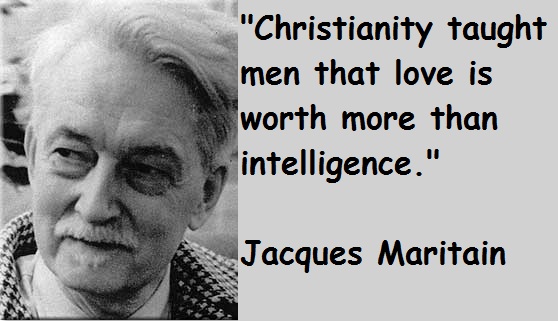
St. John Paul II, the philosopher-pope, was no Pollyanna. In his encyclical Fides et Ratio, he notes that today “the possibility of discovering the real meaning of life is cast into doubt,” and so “many people stumble through life to the very edge of abyss without knowing where they are going.” In a like vein, Jacques Maritain observed that “Nowadays the devil has made such a mess of everything…that the world will presently become uninhabitable for anybody but Saints.”
Such comments, an old teacher of mine liked to say, “lead us by way of easy and natural transition to”… politics, politicians, and statesmen and stateswomen. How so?
I’m thinking of politics as the sphere of life in which what needs to be done requires that we come together to get it done. But can we come together when we’re in doubt about the meaning of life and don’t know where we are going? Not unless there are saints among us.
I’m thinking, too, of politicians as operatives and opportunists. They are long on technique and short on vision. For them “appearance” is reality enough, and “seeming to be” is being enough.
Now come the statesmen and stateswomen. They’re the saints of the political order, and they are struggling with what is an established disorder. The struggle leads to a daily puzzling over three tough questions.
First, what’s the difference between political action and giving witness? Political action has governance and legislation as its immediate object. Consider Thomas Jefferson. Witness has the public proclamation of the truth as its immediate object. Consider Dorothy Day. That’s answer enough, for now.
Second, how can political action and giving witness come together? We’d do well to look closely at people who forged a unity of the two in their lives. Martin Luther King, Jr., is someone who did so. We are in grave need of more such people. That’s an answer, in the sense of telling us where to look for an answer.
Third, given that the times are evil and saints are few, is it possible to build a political party ordered to the common good? Such a party would be pro-life for the whole of life. Rather than fashioning golden calves from material goods, it would put material goods at the service of people. In doing so, it would honor God’s creation. That leaves us not with an answer but with a question that stubbornly remains a question.
And yet, with God, all things are possible. That’s the Good News of Easter!

Jim Hanink is an independent scholar, albeit more independent than scholarly!

Sunday, May 17, 2020

How John Paul II undermined Russia’s communists

John Paul II


GEORGE WEIGEL

Students of the Cold War’s dark arts know that communist intelligence services deeply penetrated the Vatican in the 1970s. Yet few know that Pope John Paul II, whose centenary will be marked on May 18, had his own secret agent in the Soviet Union during the 1980s. That relationship led to a remarkable personal encounter that helps explain what made the pope the man he was.
John Paul’s unlikely 007 was Irina Ilovayskaya Alberti, the Russian-born widow of an Italian diplomat. A former personal assistant to Alexander Solzhenitsyn in Vermont, she met the pope quite by accident during a papal audience in the early 1980s. A friendship quickly developed between them. As the Gorbachev thaw made access to the USSR easier, Alberti travelled to the country several times a year. “If I learned anything interesting,” she told me years later, “I’d call the pope, we’d meet, and I’d tell him.” Vatican diplomats, who liked to keep such matters on close hold, didn’t appreciate that kind of back channel. But John Paul had a habit of going around his mandarins when he thought doing so might yield useful information. He ignored the traditional managers and kept in touch with his clandestine operative.
As it happened, Alberti was also a friend of Yelena Bonner, the tough-minded wife of Soviet nuclear physicist and human rights campaigner Andrei Sakharov. Under house arrest in 1985, Sakharov went on a hunger strike and demanded Soviet officials let his wife leave the country for critical medical care. The authorities finally agreed, but Sakharov was hostage to Bonner’s good behaviour abroad. That meant no meetings with world leaders or the press.
Alberti still thought Bonner should meet the pope. When she came to Rome after her medical treatment, Alberti organised a subterfuge that had the Roman press corps chasing Bonner’s children as she drove the recovering dissident into Vatican City, incognito. Emotionally hardened by decades of battling the KGB, Bonner wasn’t given to sentimentality. Nor was she religious. Yet a two-hour, one-on-one meeting with Pope John Paul II left her sobbing. She told Alberti afterwards: “He’s the most incredible man I’ve ever met. He’s all light. He is a source of light.”
The Bonner-John Paul II relationship continued for years and eventually led to a lengthy private meeting between the pope and Sakharov, who sought advice about playing a political role in the endgame of the USSR. It was that first meeting with Bonner — and her reaction to this Pole, a man she had never met before and the leader of a faith she didn’t share — that is worth pondering on the centenary of John Paul’s birth.
How did Pope John Paul II touch hearts and minds, even those of nonbelievers, the way he did? He was a man of probing intelligence, an experienced pastor, a polyglot and a shrewd operator on the world stage. His commitment to human rights, irrespective of religious conviction or the lack thereof, had been demonstrated during his years as archbishop of Cracow and as pope. He had paid the price of that advocacy with his own blood, surviving an assassination attempt he suspected had been initiated in Moscow.
But that curriculum vitae and that credibility do not explain why a tearful nonbeliever should say, “He is all light. He is a source of light”. Or why, in his last years, wracked by Parkinson’s disease, he could still draw vast crowds and lift the spirits of the suffering.
Pope John Paul II cannot be explained or understood unless he is taken for what he said he was: a radically converted Christian disciple. He believed that God had revealed himself in history, first to the Jewish people and ultimately in Jesus of Nazareth. He believed the resurrection of the crucified Nazarene was the axial point of the human saga: an event in and beyond what we know as “history”, which disclosed that God’s passionate love for humanity was stronger than death itself.
Believing that, he lived without fear. And living without fear, he inspired fearlessness in others.

George Weigel is a distinguished senior fellow at the Ethics and Public Policy Centre and a biographer of John Paul II.